
Tom Bush Family of Dealerships

Blog / ownership & service

Five Tips To Improve Fuel Economy In Your Car

Fuel gauge showing fuel economy

Ownership & Service › Fuel Economy

Five Ways to Improve Your Car's Fuel Economy in Jacksonville, FL

By Stephen Aten, eCommerce Director, Tom Bush Family of Dealerships  |  August 26, 2026

Fuel economy is won on ordinary Jacksonville commutes, not on road trips.

Quick Answer

The five most effective ways to improve your car's fuel economy are keeping tires properly inflated, driving smoothly, holding a steady highway speed, removing unnecessary weight, and staying current on manufacturer-recommended maintenance. U.S. Department of Energy data shows these habits can recover 10% to 40% of the fuel wasted by aggressive driving alone.

Fuel prices move constantly, and there is nothing you can do about that. What you can control is how much fuel your vehicle actually uses to get you from Arlington to downtown, from Orange Park up I-295, or out to the beach on a Saturday. Improving your car's fuel economy is not about buying anything. It is about five habits, most of which cost nothing and take a few minutes.

Here is our position, and it is a slightly unpopular one: the single biggest fuel economy variable in Jacksonville is not your engine, your tires, or your fuel grade. It is your right foot. The U.S. Department of Energy puts the cost of aggressive driving at 15% to 30% of your gas mileage at highway speeds and as much as 40% in stop-and-go traffic. No maintenance item on this list comes close to that number. The mechanical tips below matter, and we will get to all of them, but they are the smaller half of the equation.

We will also correct one piece of advice you have almost certainly been given, because it is not true for the vehicle in your driveway. Take your time with this one. There is nothing here that needs to be done today.

0.2%MPG lost per 1 psi of tire pressureSource: U.S. DOE
10–40%MPG lost to aggressive driving in trafficSource: U.S. DOE
25%+MPG lost to A/C on short trips in heatSource: U.S. DOE

1. Keep Your Tires Properly Inflated

Quick Answer

Properly inflated tires improve gas mileage by 0.6% on average and up to 3% in some cases, because under-inflated tires lower gas mileage by roughly 0.2% for every 1 psi the average pressure drops. Use the psi figure on the driver's door jamb sticker, not the number molded into the tire sidewall.
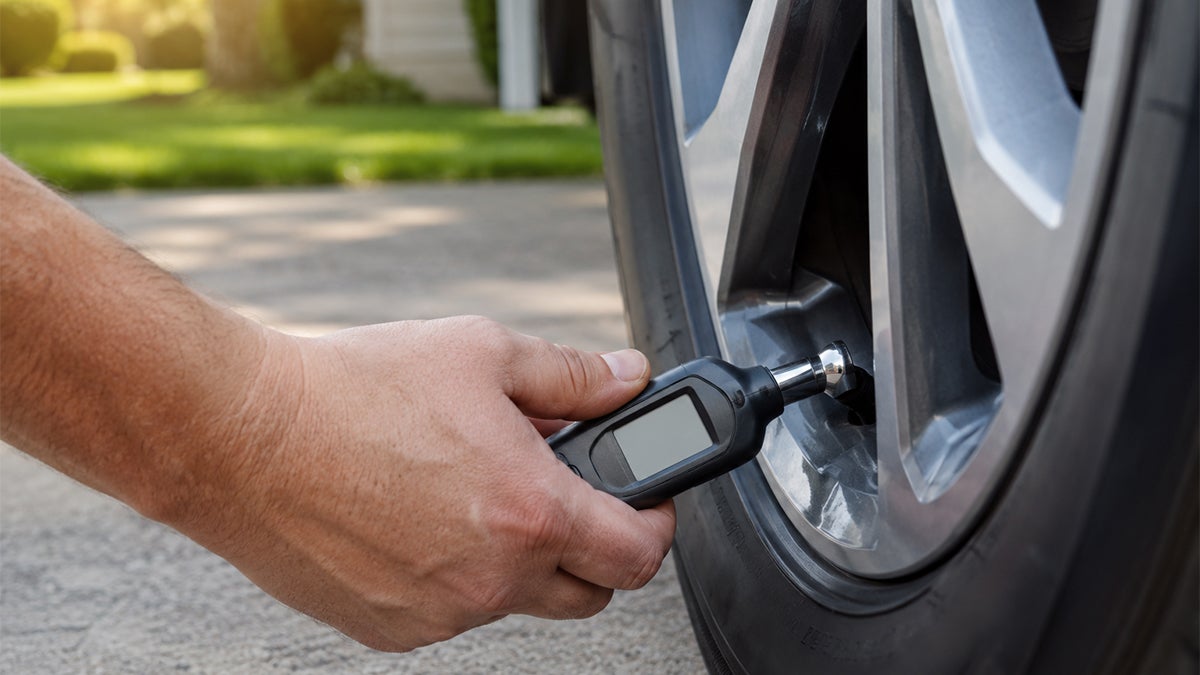
Tire gauge measuring tire pressure on a car tire

Check pressure when tires are cold — before driving, not after.

An under-inflated tire has a larger contact patch and flexes more as it rolls. That flex creates rolling resistance, and your engine burns extra fuel overcoming it. It also wears the shoulders of the tire prematurely, which is the more expensive half of the problem.

Two things worth knowing. First, the correct pressure is on the sticker inside your driver's door jamb, not the raised number on the tire itself — that sidewall figure is the tire's maximum, not your vehicle's target. Second, your tire pressure monitoring system is not an early warning. Most systems only alert at roughly 25% below the recommended pressure, by which point you have already been losing fuel economy for weeks.

Check them cold, once a month, with a $12 gauge. It is five minutes in your driveway. If you would rather not, any of our service departments across the Tom Bush family of stores will check and set them at no charge while you wait.

2. Drive Smoothly

Quick Answer

Aggressive driving — speeding, hard acceleration, and sudden braking — lowers gas mileage by roughly 15% to 30% at highway speeds and 10% to 40% in stop-and-go traffic, according to the U.S. Department of Energy. Accelerating gradually and anticipating traffic is the single largest fuel economy improvement available to most drivers.
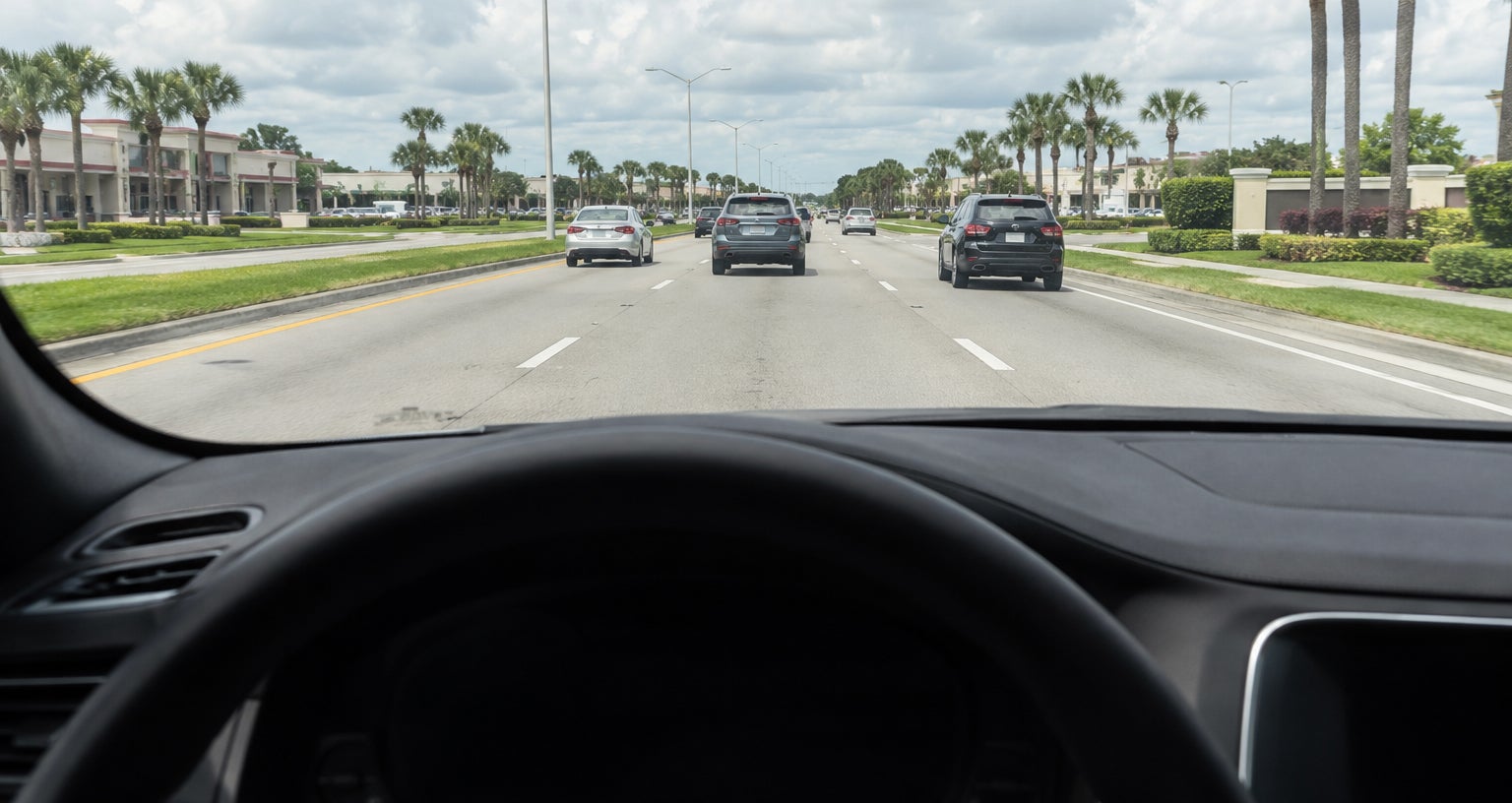
Front window view of the road ahead while driving

Every hard brake is fuel you already paid for, converted to heat.

Every time you brake hard, you are throwing away momentum your engine burned fuel to create. Every time you accelerate hard to close a gap, you buy it back at a premium. Do that thirty times on a commute down Atlantic Boulevard and the cost is real.

The habit that fixes it is not driving slowly — it is looking further ahead. Watch two or three cars up instead of one. Read the light cycle before you get to it. Leave enough following distance that a car merging in front of you costs you a small lift off the throttle instead of a hard brake. Drivers who do this arrive at the same time as everyone else, because in city traffic your average speed is set by the lights, not by your acceleration.

The Bottom Line

If you only change one thing after reading this, change how you approach a red light. Coasting toward a light you can already see is red uses almost no fuel. Accelerating toward it and braking hard uses the most fuel of anything you do in a car.

3. Maintain a Steady Speed

Quick Answer

Gas mileage usually decreases rapidly above 50 mph, and each 5 mph driven over 50 mph can lower gas mileage by 7% or more, according to the U.S. Department of Energy. On highway stretches of I-95 or I-295, holding one steady speed uses measurably less fuel than repeatedly speeding up and slowing down.

Sunset view of a highway at dusk

Above 50 mph, aerodynamic drag becomes the dominant fuel cost.

There are two separate effects at work here, and it helps to keep them apart. The first is drag: air resistance rises with the square of your speed, so the faster you go, the more of your fuel is spent pushing air out of the way. The second is variation: constantly speeding up and slowing down costs fuel on top of whatever your average speed already costs you.

On the open stretches of I-95 south toward St. Augustine or I-295 through Mandarin, cruise control is a genuine fuel economy tool because it holds speed better than your foot does. In heavy commuter traffic it is less useful, and around Nassau County's rolling grades it can actually work against you by aggressively downshifting to hold speed up a hill. Use it where the road is flat and the traffic is thin.

HabitEstimated fuel economy impactSource
Aggressive driving in traffic−10% to −40%U.S. DOE
Each 5 mph over 50 mph−7% or moreU.S. DOE
A/C on short trips in extreme heat−25% or moreU.S. DOE
Roof-top cargo box−2% to −17%U.S. DOE
Every extra 100 lbs carried−1%U.S. DOE
Every 1 psi of tire pressure lost−0.2%U.S. DOE
Wrong grade of motor oil−1% to −2%U.S. DOE
Fixing an out-of-tune engine+4% averageU.S. DOE

4. Remove Unnecessary Weight

Quick Answer

An extra 100 pounds of cargo lowers gas mileage by about 1%, according to the U.S. Department of Energy. Roof-mounted cargo is far more costly than weight in the trunk: a roof-top cargo box can reduce fuel economy by 2% to 17% because it adds aerodynamic drag on top of the added weight.
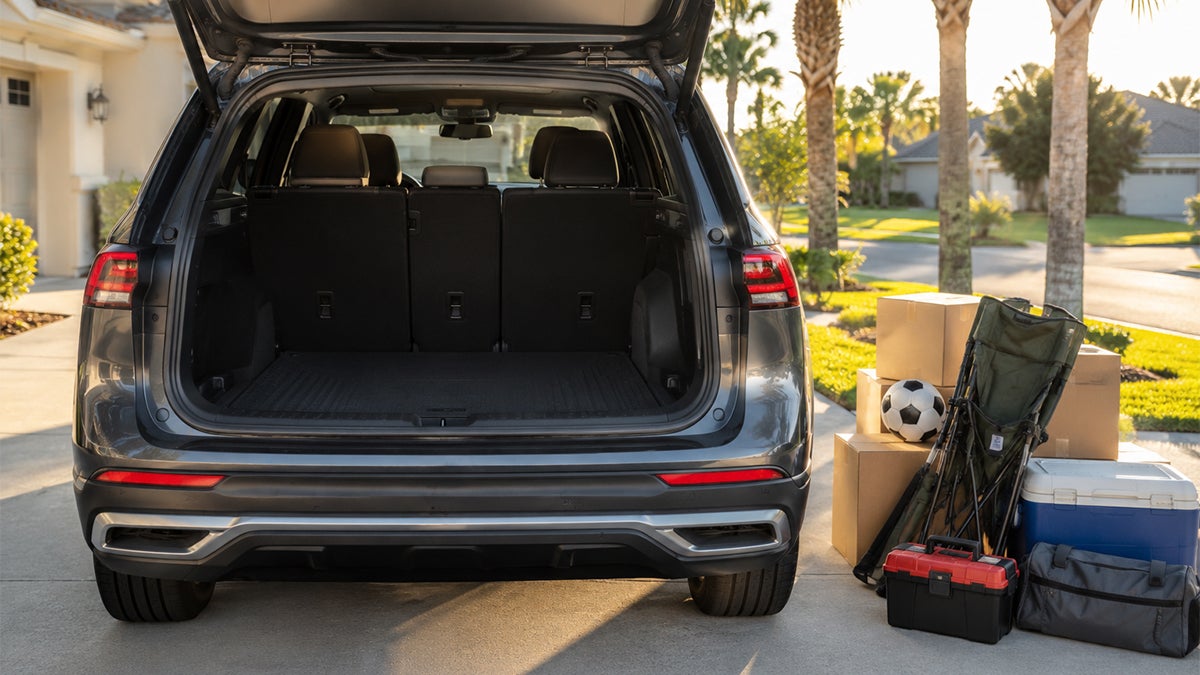
SUV rear cargo area being cleared out

Weight in the trunk costs about 1% per 100 lbs. Weight on the roof costs far more.

Weight in the cabin or trunk is the smaller of the two issues. A hundred pounds of gear you have been meaning to unload costs you roughly 1%. Worth fixing, but not dramatic.

Roof cargo is the one people underestimate. A cargo box, kayak rack, or bike carrier does not just add pounds — it adds a wall of aerodynamic drag exactly where your vehicle was shaped to be smooth, and drag scales with speed. That is why the penalty range runs all the way to 17%. If you carry boards to the beach or a box to the mountains a few weekends a year, take the rack off between trips. It is a ten-minute job that pays every day you drive.

5. Keep Up With Regular Maintenance

Quick Answer

Fixing an out-of-tune engine improves efficiency by about 4% on average, and using the wrong grade of motor oil lowers gas mileage by 1% to 2%, according to the U.S. Department of Energy. Following your manufacturer's maintenance schedule protects the fuel economy your vehicle was engineered to deliver.

MINI technician working on a MINI Cooper in a clean service bay

Fixed right the first time — factory-trained technicians, brand-approved parts.

Maintenance does not usually make a healthy car more efficient than it was designed to be. What it does is stop a car from quietly getting worse, and recover mileage a car has already lost. Those are both worth money, but they are different claims, and dealers are not always careful about the difference.

The two items with the clearest evidence behind them are motor oil grade and engine condition. Using a heavier grade than your manufacturer specifies costs 1% to 2%, which is why the grade printed on your oil cap is a specification and not a suggestion. And a vehicle running out of tune — a failing sensor, a misfire you have learned to ignore — recovers about 4% on average once it is repaired.

The tip we need to correct

Now the unpopular part. You have probably been told that replacing a clogged engine air filter improves your gas mileage. On a modern fuel-injected vehicle, the U.S. Department of Energy says plainly that it does not. Your engine computer compensates for restricted airflow, so the fuel economy stays roughly where it was. That guidance held true for older carbureted engines, and it has been repeated ever since.

A clean air filter still belongs on your maintenance schedule — it improves acceleration and protects the engine from ingesting debris, and in Northeast Florida's pollen and coastal dust it earns its keep. It is simply not a fuel economy fix, and we would rather tell you that than sell it to you as one.

From the Tom Bush Service Drive

“Across our six Jacksonville stores, the fuel economy complaints that turn out to have a real mechanical cause are usually one of three things: tires that have been low for months, a check-engine light the owner learned to live with, or the wrong oil from a quick-lube shop. All three are cheap to find and cheap to fix. We would rather tell you it is your tires than sell you a service you do not need.”

Stephen Aten, eCommerce Director, Tom Bush Family of Dealerships

The Florida Factor: Heat and Air Conditioning

Quick Answer

Air conditioning use can reduce a conventional vehicle's fuel economy by more than 25%, and the effect is largest on short trips in very hot weather, according to the U.S. Department of Energy. For Jacksonville drivers between May and September, A/C is often a bigger fuel economy variable than tire pressure and cargo weight combined.

Parking in shade lowers cabin temperature and shortens the A/C's hardest working minutes.

Every national fuel economy list is written for a national climate. Ours is not one. From roughly May through September, the largest single draw on your fuel economy in Jacksonville may be the air conditioning — more than 25% on short trips in extreme heat, which is a bigger number than most of the tips above.

We are not going to tell you to drive without air conditioning in a Jacksonville August. That is not advice, it is an endurance test. The realistic version is this: the A/C works hardest during the first few minutes, pulling a 140-degree cabin down to something livable. So the fix is fewer cold starts, not less cooling. Combine errands into one trip. Park in shade or use a windshield shade. Crack the windows for the first thirty seconds to dump the hottest air before the compressor has to. And on a highway run, keep the windows up — above about 45 mph, open windows cost more in drag than the A/C costs in load.

Your 10-Minute Fuel Economy Checklist

Take This With You

The Saturday Morning Fuel Economy Check

Everything here can be done in your driveway, before the car has been driven, with no tools beyond a tire gauge. Work down the list once a month.

  Find the psi figure on your driver's door jamb sticker — not the tire sidewall

  Check all four tires cold, before driving, and set them to that figure

  Check the spare too, if your vehicle carries a full-size one

  Empty the trunk and cabin of anything you are not actively using

  Remove the roof rack, cargo box, or bike carrier if the next trip is weeks away

  Confirm the oil grade on your last service receipt matches your oil cap

  Note any check-engine light or rough idle and schedule it — that is the 4% item

  Look up your next scheduled service interval and put it on the calendar

  Pick one route you drive daily and plan where you will coast instead of brake

Schedule Service at Your Tom Bush Store →

Frequently Asked Questions

What is the fastest way to improve my car's fuel economy?

Checking and correcting your tire pressure is the fastest improvement available to most drivers, and it takes about five minutes. The U.S. Department of Energy reports that properly inflated tires improve gas mileage by 0.6% on average and up to 3% in some cases, because under-inflated tires lower gas mileage by roughly 0.2% for every 1 psi the average pressure drops.

Does replacing my engine air filter improve gas mileage?

Not on a modern vehicle. The U.S. Department of Energy states that replacing a clogged air filter does not improve fuel economy on newer fuel-injected engines, because the onboard computer compensates for restricted airflow. A clean air filter still matters for acceleration and engine protection, so it belongs on your maintenance schedule. It just is not a fuel economy fix.

How much does running the air conditioning hurt fuel economy in Florida?

Air conditioning use can reduce a conventional vehicle's fuel economy by more than 25%, and the effect is largest on short trips in very hot weather, according to the U.S. Department of Energy. That makes it one of the biggest fuel economy variables for Jacksonville drivers from roughly May through September. The practical answer is not to suffer without air conditioning, but to combine errands so the cabin is cooled once instead of four separate times.

Does driving slower on I-95 actually save fuel?

Yes. Gas mileage usually drops rapidly above 50 mph, and the U.S. Department of Energy estimates that each 5 mph driven over 50 mph can lower gas mileage by 7% or more. On a highway commute between downtown Jacksonville and Ponte Vedra or St. Johns, easing off by 5 mph and holding a steady speed is a measurable savings, not a rounding error.

How much fuel does extra weight in my trunk cost me?

About 1% of your gas mileage per extra 100 pounds, according to the U.S. Department of Energy. Roof-mounted cargo is a much larger penalty because it adds aerodynamic drag rather than just weight: a roof-top cargo box can reduce fuel economy anywhere from 2% to 17%. If you only use a cargo box for trips to the Smokies or Georgia, take it off when you get home.

Will regular service at a dealership improve my fuel economy?

It protects the fuel economy the vehicle was built to deliver, and it can recover mileage you have already lost. The U.S. Department of Energy reports that fixing an out-of-tune engine improves efficiency by about 4% on average, and that using the wrong grade of motor oil lowers gas mileage by 1% to 2%. Both are exactly the kind of thing a factory-trained technician catches during a scheduled service visit.

Common Questions, Answered in One Line

Where do I find the correct tire pressure for my car?

On the sticker inside the driver's door jamb — the number on the tire sidewall is the tire's maximum, not your vehicle's target.

How often should I check tire pressure?

Once a month, and always when tires are cold, before the car has been driven.

Will my TPMS warning light tell me before I lose fuel economy?

No — most systems only alert at roughly 25% below recommended pressure, long after fuel economy has started slipping.

Is premium fuel better for fuel economy?

Only if your manufacturer requires it; in an engine designed for regular, premium fuel does not improve mileage.

Does idling in a drive-thru waste much fuel?

Idling uses roughly a quarter to a half gallon of fuel per hour, per the U.S. Department of Energy.

Windows down or A/C on?

Windows down in slow city traffic, A/C on above roughly 45 mph where aerodynamic drag outweighs the compressor load.

Does cruise control always save fuel?

On flat, open highway yes; in heavy traffic or on rolling hills it can work against you.

Do I need to warm up my car before driving?

Not in Florida — modern engines warm fastest under gentle driving, and extended idling only burns fuel.

How much does a roof rack cost me if I leave it on year-round?

Up to 17% of your fuel economy, which is why it is worth removing between trips.

Can Tom Bush check my tire pressure without an appointment?

Yes — stop by any of our Jacksonville-area service departments and we will check and set them at no charge.

Six Stores. One Standard.

Factory-trained technicians and brand-approved parts across the Tom Bush Family of Dealerships. Family-owned in Jacksonville since 1970. No pressure, and no service you do not need.

Schedule Service →Find Your Store

Shopping for something more efficient? Browse new and pre-owned inventory across all six Tom Bush stores →  |  Need tires? See our tire and parts department →

About the Author

Stephen Aten

eCommerce Director — Tom Bush Family of Dealerships

Stephen Aten leads digital strategy across the six Tom Bush rooftops in Jacksonville and Orange Park, working daily with the group's sales and service teams. The Bush family has served Northeast Florida since 1970, and is now in its fourth generation of family ownership.

Sources

1. Keeping Your Vehicle in Shape — U.S. Department of Energy & U.S. EPA

2. Driving More Efficiently — U.S. Department of Energy & U.S. EPA

3. Fuel Economy in Hot Weather — U.S. Department of Energy & U.S. EPA

4. Fuel Economy Tips — U.S. Department of Energy & U.S. EPA
Posted in:

Related Posts

1st_time_buyer

First Time Car Buyer Guide Jacksonville Finance Prep

Financing › First-Time Buyers A First-Time Car Buyer Guide for Jacksonville By Stephen Aten, eCommerce Director, Tom Bush Family of Dealerships  |  Updated August 26, 2026 Preparation is what turns a first application into a straightforward one. Quick Answer A first-time car buyer in Jacksonville should prepare four things before applying: a total vehicle budget, identity and income documents, insurance details, and a written list of financing questions. Preparation does not promise approval or any particular offer. It gives the lender the records needed to review your application without delay. In This Guide Start With a Total Budget, Not a Monthly Payment Can a First-Time Shopper Finance With No Credit? Documents to Prepare Before Applying Should a First-Time Shopper Use a Cosigner? Prequalification and Application Steps What to Confirm Before You Sign What to Bring: A Printable Checklist Frequently Asked Questions Buying your first car is mostly a paperwork exercise wearing a stressful disguise. The part that feels intimidating — sitting across from a finance manager — goes quickly when your records are in order. The part that actually costs money is the decision you make about loan term, and most first-time buyers make it without seeing the number that matters. Here is our position: the monthly payment is the least useful number in the entire transaction. It is the easiest one to manipulate, because stretching the loan a year or two lowers it without making the vehicle cost a dollar less. The number that tells you the truth is the total you will pay across the full loan, and it belongs in front of you before you sign anything. This guide covers what to prepare, what lenders actually look at, and which figures to confirm on the final paperwork. It is written for shoppers with limited or no credit history. Nothing here promises approval or a particular rate — every lender applies its own review. 2x Interest paid on a 6-year loan vs. a 3-year CFPB, $20,000 example 5 yrs Maximum loan term the CFPB recommends Source: CFPB 3 Free credit reports to pull before applying Source: CFPB Start With a Total Budget, Not a Monthly Payment Quick Answer Set a total vehicle range before you choose a vehicle, and include price, taxes, registration, insurance, fuel, and future service. A monthly payment considered on its own hides the two things that decide what a car really costs: the length of the loan and the money you spend to keep the car on the road. Build the range from everything the vehicle will cost you, not just the financed amount. Insurance for a first-time owner is often the line item that surprises people, and it is worth getting a quote on a specific vehicle before you commit to it rather than after. The loan term deserves more attention than it usually gets. The Consumer Financial Protection Bureau puts a concrete number on it: on a $20,000 loan at 4.75%, a three-year term costs $1,498 in interest while a six-year term costs $3,024 — more than twice as much for the same car. The monthly payment on that six-year loan looks friendlier every single month, and that is exactly the problem. The Bottom Line A longer term is not a discount. It is the same car, more interest, and more time spent owing more than the vehicle is worth. The CFPB recommends keeping an auto loan to five years or less. If the payment only works at six or seven, the honest read is that the vehicle is above budget. A larger amount paid upfront reduces the amount financed, which lowers both the payment and the total interest. That is the lever worth pulling. Just do not pull it so hard that you have nothing left for insurance, registration, and the first service visit. Can a First-Time Shopper Finance With No Credit? Quick Answer Often, yes — but no credit and poor credit are different situations. No credit means a lender has little recorded borrowing history to review. Poor credit means there are recorded problems inside an existing file. Financing may still be possible with limited history, though each lender applies its own review and no outcome is guaranteed. This distinction matters more than most first-time buyers realize, because the two situations are handled differently. A thin file is a gap in information. A damaged file is information the lender already has and does not like. This guide addresses the first one; recorded late payments, collections, or defaults call for a separate conversation with a finance manager. With limited history, lenders tend to look at what else can demonstrate stability: income, employment, how long you have lived at your address, how long you have worked where you work, and existing debt obligations. Length of time in one place and one job can give an application context that a credit score cannot supply. It builds a case. It does not guarantee an approval. Pull your credit reports before you apply, not after. You are entitled to a free report from each of the three major reporting companies — Equifax, Experian, and TransUnion — through AnnualCreditReport.com, the federally authorized source. Reviewing them can surface errors, old addresses, or accounts you do not recognize, and it tells you what a lender is about to see. Finding a mistake a week before you apply is a very different experience from finding it at the dealership. Documents to Prepare Before Applying Quick Answer Most finance reviews ask for records confirming five things: identity, income, residence, employment, and insurance. Bringing them in one folder is the single easiest way to shorten the process. A lender may request additional records after reviewing your application. Bring these to your appointment: • Government-issued photo ID that matches the name on the application, current and unexpired. • Recent pay statements or other income records the lender accepts. Self-employed shoppers should ask what applies before the appointment. • Proof of residence — a current utility bill or lease document showing your address. • Insurance information, or contact details for the provider you plan to use. • Employer details — name, address, phone number, and your start date. • Trade documents if another vehicle is entering the transaction, including the title or current payoff information. Two details cause more delays than anything else on that list. First, every record should use the same legal name and the same current address — a license with an old address and a utility bill with a new one creates a question somebody has to resolve. Second, keep digital copies on your phone, because the one document a lender asks for next is reliably the one you left at home. Program rules change, so ask which documents apply to your situation before you come in rather than assuming last year's list still holds. Should a First-Time Shopper Use a Cosigner? Quick Answer Not automatically. A cosigner joins the credit obligation and accepts legal responsibility for repayment, which means a missed payment can damage both people's credit. It is a genuine option for a thin file, but it should follow an explicit conversation about who pays and what happens if a payment is late. A cosigner does not replace the primary borrower's obligation — it adds a second person to it. The lender may review the cosigner's income, debt, and credit file alongside yours. Both names carry the consequences of how the loan performs, for as long as it exists. Before you ask someone, settle four things out loud: which account the payment comes from, what date it is due, who has visibility into the account, and what the plan is if a payment is going to be late. A cosigner who finds out about a missed payment from their own credit report is a relationship problem as well as a financial one. Deciding how much to put down Down payment planning belongs in the same discussion, because both levers change the same number. Work through these questions before you commit to an amount: • How much will remain for insurance, registration, fuel, and the first service visit? • Does a larger upfront amount reduce the payment enough to matter for your budget? • Does a trade-in have an existing payoff that must be cleared first? • Does the lender or current program require a minimum upfront amount? Do not empty emergency savings to lower a loan balance. Costs arrive after delivery — the first insurance premium, the tag and registration, a set of tires the previous owner deferred. Keeping a reserve is worth more than shaving a few dollars off a payment. Prequalification and Application Steps Quick Answer Prequalification is an early estimate based on information you supply. It is not final approval. A full application requires a deeper lender review plus the details of the specific vehicle you have chosen, and the final terms can differ from the estimate. Before you submit anything, read the disclosure and find out which kind of credit inquiry the tool uses. Some prequalification tools use a soft inquiry, which does not affect your credit. Others use a hard inquiry, which does. That information is disclosed, but it is not always prominent, and it is worth thirty seconds of reading. Once you have an estimated range, compare it against the total budget you built earlier and shop inside whichever number is smaller. The full application will ask for identity, income, residence, employment, and credit information, and the lender may request more documents before reaching a decision. When an offer comes back, compare the written terms against what you planned — not against what you remember being said. A verbal summary is not the agreement. The paperwork is. What to Confirm Before You Sign Quick Answer Confirm nine figures before signing: vehicle price, amount paid upfront, trade credit, amount financed, APR, loan term, monthly payment, every fee, and the total of payments across the full loan. If a payment looks better than expected, check the term before celebrating. This is the part of the process where slowing down pays the most, and where nobody will rush you at Tom Bush. Read the agreement. Ask what any line item is. A finance manager who cannot explain a charge in plain language is telling you something useful. • The vehicle price matches the figure you agreed to. • The trade value and any payoff appear correctly and separately. • The APR, loan term, monthly payment, and first payment date are all what you expected. • Every fee is identified, and you know what each one covers. • Any optional product — service contract, protection package — is one you chose, and you can see whether it was added into the financed amount. • The paperwork describes the vehicle you actually selected, by VIN. • You leave with copies of everything you signed. How We Handle This at Tom Bush “A first-time buyer should never feel hurried through the finance office. Our pricing is straightforward — you pay tax, tag, title, and our Pre-Delivery Service Charge, which we explain before you ask. No add-ons, no market adjustments. If a first-time shopper wants to take the numbers home and think about them overnight, that is a completely reasonable thing to do.” Stephen Aten, eCommerce Director, Tom Bush Family of Dealerships What to Bring: A Printable Checklist Take This With You First-Time Buyer Folder Checklist Put every item in one folder before your appointment. The last three are the ones people forget, and they are the ones that protect your budget. ✓ Government-issued photo ID, current and matching your application name ✓ Recent pay statements or accepted proof of income ✓ Proof of residence — utility bill or lease with your current address ✓ Insurance provider details, or a quote for the vehicle you are considering ✓ Employer name, address, phone number, and your start date ✓ Trade title or payoff information, if a trade is involved ✓ Your credit reports, reviewed within the last 30 days ✓ Your total budget figure, written down, including insurance and registration ✓ The maximum loan term you are willing to accept ✓ A list of questions you want answered before signing See Our First-Time Owner Program → Frequently Asked Questions Can I get financed for a car with no credit history? Often yes, though it depends on the lender and your overall profile. No credit is different from poor credit — it means there is little recorded borrowing history to review rather than recorded problems. Lenders commonly weigh income, employment length, time at your address, and existing debt when the credit file is thin. Each lender applies its own review, and no preparation guarantees approval. What documents do I need to buy my first car? Plan on records that confirm five things: identity, income, residence, employment, and insurance. That usually means a current government-issued photo ID, recent pay statements, a utility bill or lease, your insurance details, and your employer's name, address, phone, and your start date. Bring trade paperwork if a trade is involved, and ask ahead of time whether anything else applies to your situation. Does a cosigner guarantee approval? No. A cosigner adds a second person who is legally responsible for repayment, and the lender may review that person's income, debt, and credit file alongside yours. It can strengthen an application with a thin file, but it does not remove the primary borrower's obligation and it does not guarantee an outcome. Missed payments affect both people's credit. Is prequalification the same as being approved? No. Prequalification is an early estimate based on the information you provide. Final approval requires a full application, a deeper lender review, and the details of the specific vehicle. Final terms can differ from the estimate, so compare the written offer against your budget rather than relying on the earlier number. Should I take a longer loan to get a lower payment? Be careful with that trade. The Consumer Financial Protection Bureau's example on a $20,000 loan at 4.75% shows $1,498 in interest over three years versus $3,024 over six — more than double for the same vehicle. Longer loans also make it more likely you will owe more than the car is worth. The CFPB recommends keeping an auto loan to five years or less. How do I check my credit before applying? Request your reports from all three major reporting companies — Equifax, Experian, and TransUnion — through AnnualCreditReport.com, the federally authorized source for free reports. Review each for errors, outdated addresses, and unfamiliar accounts, and dispute anything inaccurate before you apply rather than after. Common Questions, Answered in One Line What is APR? The annual percentage rate — the yearly cost of borrowing including interest and certain fees, which makes it more useful than the interest rate alone for comparing offers. What does “amount financed” mean? The amount you are actually borrowing after your upfront payment and any trade credit are applied. Does checking my own credit report hurt my score? No — reviewing your own report is a soft inquiry and does not affect your score. What is negative equity? Owing more on the loan than the vehicle is currently worth, which becomes more likely on longer loan terms. Do I need insurance before I drive off? Yes — coverage must be active before delivery, so line up your provider before your appointment. Can I get financed without a job? Lenders review verifiable income, which does not always mean traditional employment; ask a finance manager what documentation applies. Should I tell the dealer my target monthly payment? Lead with the total price and loan term you want instead — a payment target alone can be met by stretching the term. What is the Pre-Delivery Service Charge? Tom Bush's single dealer fee, explained upfront on every deal — beyond tax, tag, and title, there are no add-ons or market adjustments. How long does the finance review take? It varies by lender and by how complete your documents are, which is the main reason to bring everything in one folder. Can I change my mind after signing? Auto sales generally are not subject to a cooling-off period, so treat signing as final and ask every question before you get there. Your First Car, Without the Pressure Tom Bush has been family-owned in Jacksonville since 1970. Bring your questions, take your time, and we will walk you through every step. You are in control of this process. First-Time Owner Program → Start Prequalification About the Author Stephen Aten eCommerce Director — Tom Bush Family of Dealerships Stephen Aten leads digital strategy across the six Tom Bush rooftops in Jacksonville and Orange Park, working daily with the group's sales and finance teams. The Bush family has served Northeast Florida since 1970, and is now in its fourth generation of family ownership. Sources 1. How do I compare auto loan offers? — Consumer Financial Protection Bureau 2. How do I get a free copy of my credit reports? — Consumer Financial Protection Bureau 3. Take Control of Your Auto Loan — Consumer Financial Protection Bureau 4. AnnualCreditReport.com — Federally authorized free credit reports This guide is general information, not financial advice, and it does not constitute an offer of credit. Financing is subject to lender approval. Rates, terms, program rules, and required documentation vary by lender and are subject to change. Examples shown are illustrations published by the Consumer Financial Protection Bureau and do not represent an available offer.