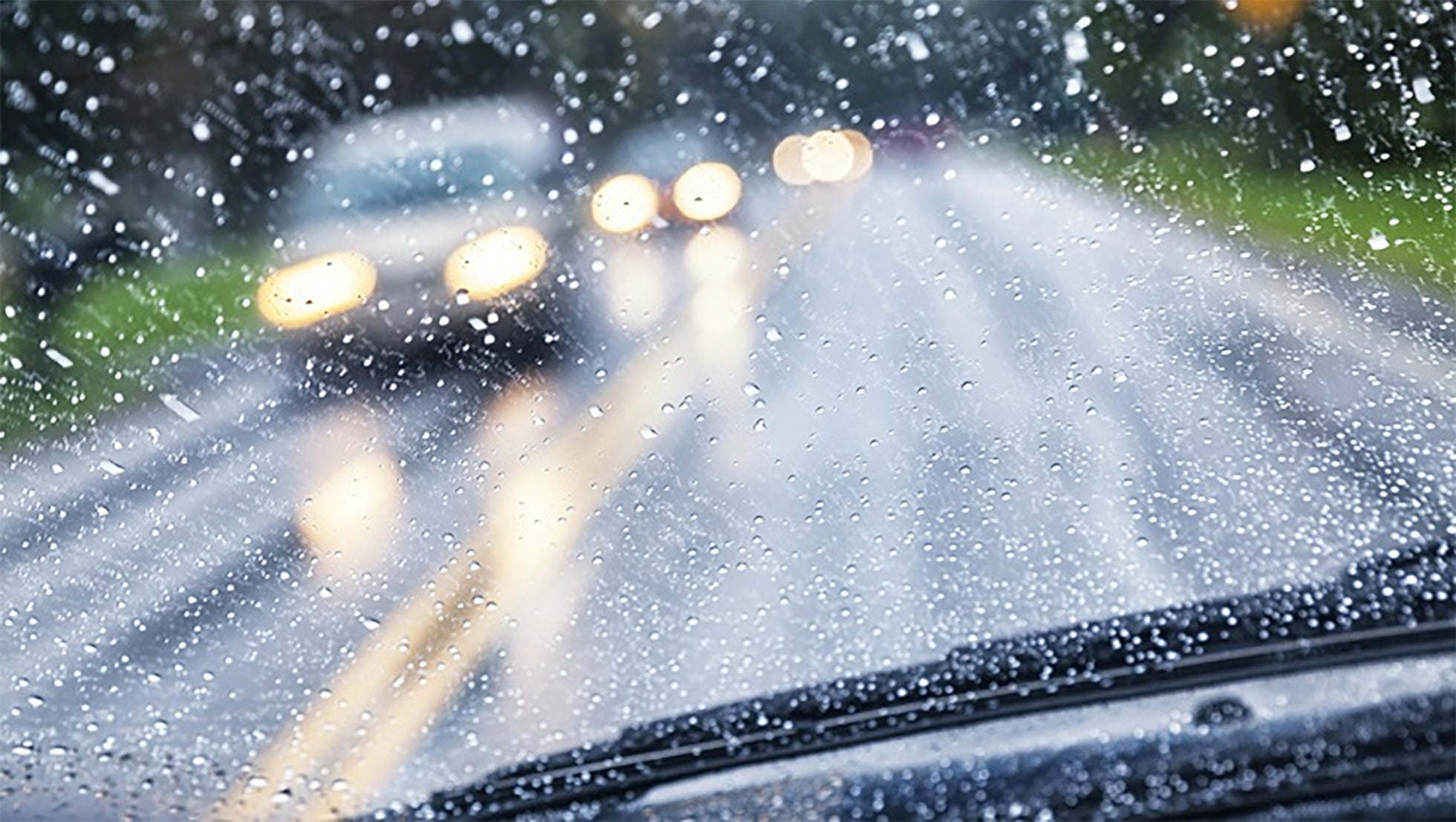
Anyone who has driven I-95 during a 4 p.m. summer thunderstorm knows how fast Northeast Florida roads go from dry to dangerous. Visibility drops, spray from the truck ahead covers your windshield, and standing water shows up in the outside lane before the storm drains can catch up. Add hurricane season on top of that, and rainy-season driving here is a real thing, not a figure of speech. The good news: most wet-weather problems are preventable with a few minutes in the driveway. Here are eight things worth checking before the next storm rolls in. You don't need to be a mechanic for any of them, and if something doesn't look right, we'll walk you through every step at any Tom Bush service department. The 10-Minute Version Short on time? Walk around the car once: tread and pressure on all four tires, wipers on, brake pedal firm, every light working, battery terminals clean, washer fluid full, A/C blowing cold, kit in the trunk. Anything that fails gets a closer look below. 1. Tires: The Only Thing Touching the Road Hydroplaning starts here. Your tires are the only part of your car that actually touches the road, and on wet pavement they're doing all the work. Look at tread depth first. Florida's legal minimum is 2/32 of an inch, but tread that shallow struggles to push water out of the way, which is how hydroplaning starts. Many technicians recommend replacing tires closer to 4/32 if you do a lot of rainy-season driving. Look for uneven wear, cracks, or bulges while you're down there, and check the pressure on all four tires (plus the spare) against the number on the sticker inside your driver's door jamb, not the number on the tire sidewall. Heat swings between a 95-degree afternoon and a cool storm can move tire pressure more than you'd expect. 2. Wipers: The $20 Fix That Saves Your Commute Florida sun bakes wiper blades. Rubber that has spent a summer on a hot windshield gets stiff and cracked, and you usually find out during the first heavy rain. Run your wipers with washer fluid and watch the result. Streaks, skipping, chattering, or a band the blade never clears all mean it's time for a new set. Wiper blades are inexpensive and take a few minutes to replace, and it's one of the highest-return fixes on this list. 3. Brakes: Wet Roads Need Longer to Stop Wet roads add stopping distance, so your brakes need to be in good shape before the weather turns. Pay attention to squeaking, grinding, a pulsing or vibrating pedal, a pedal that feels soft or sinks toward the floor, or the car pulling to one side when you brake. Any of those is a reason to have the brakes inspected before you're depending on them in a downpour on Blanding Boulevard. Our factory-trained technicians can check pad life, rotors, and brake fluid in a single visit. 4. Lights: Be Seen, Not Just See In heavy rain, your lights are as much about being seen as about seeing. Have someone stand outside the car while you cycle through headlights, high beams, brake lights, turn signals, reverse lights, and hazards. Replace anything that's burned out. Also look at the lenses themselves: Florida UV clouds and yellows plastic headlight housings over time, and a hazy lens can cut your light output noticeably. A headlight restoration kit or a professional cleaning brings most of that back. One more reminder that surprises a lot of drivers: in Florida, if your wipers are on, your headlights are required to be on too. 5. Battery: Summer Heat Did the Damage Already Heat is harder on batteries than cold, and a battery that made it through a Jacksonville summer may not have much left by the time storm season peaks. Look for corrosion on the terminals, make sure the connections are tight, and pay attention to slow cranking when you start the car. If your battery is more than three years old, it's worth having it tested. A battery test takes a few minutes and is far better than finding out in a flooded parking lot. 6. Fluids: Washer Fluid Is the One People Forget Check your windshield washer fluid, engine oil, coolant, brake fluid, and power steering fluid (if your vehicle has it). Washer fluid matters more than people think during rainy season: road spray on I-295 leaves a film that plain rain won't clear, and an empty reservoir at the wrong moment is a real visibility problem. Keep it full, and keep a spare jug in the garage. 7. Defroster and A/C: Fog Is the Sneaky One Humidity is the other half of a Florida storm. When warm, wet air hits cool glass, your windows fog almost instantly, and the fastest way to clear them is a working A/C system paired with the defroster. Test the front and rear defrosters and make sure cold air is actually coming out of the vents. If the A/C is weak or the windows take a long time to clear, have the climate system checked before the next storm rather than after. 8. Emergency Kit: For the Day Everything Else Fails Even a well-maintained vehicle can get caught out. Keep a basic kit in the trunk: a flashlight, a phone charger or battery pack, a small first-aid kit, bottled water, a rain poncho, and a reflective vest or triangles. Keep your registration and insurance card somewhere you can reach without digging. During hurricane season, add a printed list of a few phone numbers in case your phone dies, and keep the gas tank at least half full when a storm is in the forecast. A Few Minutes Now Can Make a Difference You don't need special tools or a lift to do any of this. A quick walk-around covering tires, wipers, brakes, lights, battery, fluids, and climate control is enough to catch most of the problems that turn a rainy commute into a bad day. And if the weather turns severe, the safest option is often the simplest one: wait it out. Florida storms tend to move through quickly, and the extra 30 minutes is almost always worth it. Let Tom Bush Handle the Rainy-Season Check for You If you'd rather have a professional look everything over, any Tom Bush service department can run through this list in one visit. Factory-trained technicians, brand-approved parts, and a plain explanation of what you need and what can wait. Fixed right the first time, no add-ons, no surprises. Family-owned since 1970. We're your neighbors, not a corporation, and we'll be here after the storm passes. Schedule service at Tom Bush → About the Author: Stephen Aten is the eCommerce Director for Tom Bush Family of Dealerships, a family-owned automotive group serving Jacksonville and Northeast Florida since 1970. Reach him at stephaten@tombush.com.